Jabiru and Arnhem Land
Aug 8, 2023

Greetings from Darwin, the traditional lands of the Larrakia people. It's been over a week since I've been able to update the blog, due to a combination of poor internet (even with the StarLink!), big adventures and to be frank, a bit of exhaustion! I did write half of this post in Litchfield, just outside the National Park, where we spent 3 nights. Litchfield is an area which has traditional been a meeting place of a number of Aboriginal groups, including the Marrathiel, Marranunggu, Werat, Warray and Koongurrukun people.
We were able to fit some pretty amazing experiences into our last few days in Kakadu. We moved from Cooinda to Jabiru last Wednesday, stopping in at the Warradjan Aboriginal Cultural Centre to make our first official art purchase, which very felt grown up. And then, in an impressive display of time management (ha!), we were only 10 minutes late to the Kakadu Languages, People and Stories session we had booked in for at the Marrawuddi Arts and Cultural Centre in Jabiru. Thankfully they hadn’t started to we were actually on time!
The session was led by a non-Aboriginal linguist who has been working in Kakadu for nearly 20 years, along with 3 local elders, including a traditional owner of the town of Jabiru (which is the only town in Australia to have had native title granted over it). They explained how the written version of the local languages had been structured in the 1970s by linguists working with local communities, and then they gave us a very rudimentary introduction to some of the key linguist structures of Bininj Kunwok, ('the people's language'), such as Kunwinjku and Kundjeyhmi, which are spoken in Jabiru, Gunbalanya and the surrounding areas. They explained the system of skin names and moiety, which is a foundational social structure and a key element of both language and culture. We also got some more info about tenses, sentence structure, phonemes (only 21 used, so much more straight forward than English!) and prefixes (na is feminine and ngal is masculine prefix for skin names, ‘an’ is used for things relating to plants / nature, and kun used for places and culture). At the end we also got to see some artwork that one of the elders was working on at the centre and learn a bit about the cross-hatching technique used in the local art techniques (called rarrk) and where the traditional ochre colours are sourced. They packed a lot of info into 45 minutes, that’s for sure!
On Thursday morning the girls and I went to a weaving session with a local elder at the Bowali Visitor Centre, which was really special. We sat outside under some trees, with Patsy who has spent her whole life in Kakadu and was a weaver and artist, as well as a non-Aboriginal ranger called Megan. Patsy talked us through how to use 3 strands of non-dyed pandanas to form the basis of a bracelet, and then how to weave the coloured strands around it. We talked lots as we worked, learning about how the pandanas is collected, how the various roots and berries were collected to create the dyes, how the skills had been traditionally used, and how they were now used primarily to create art and income.
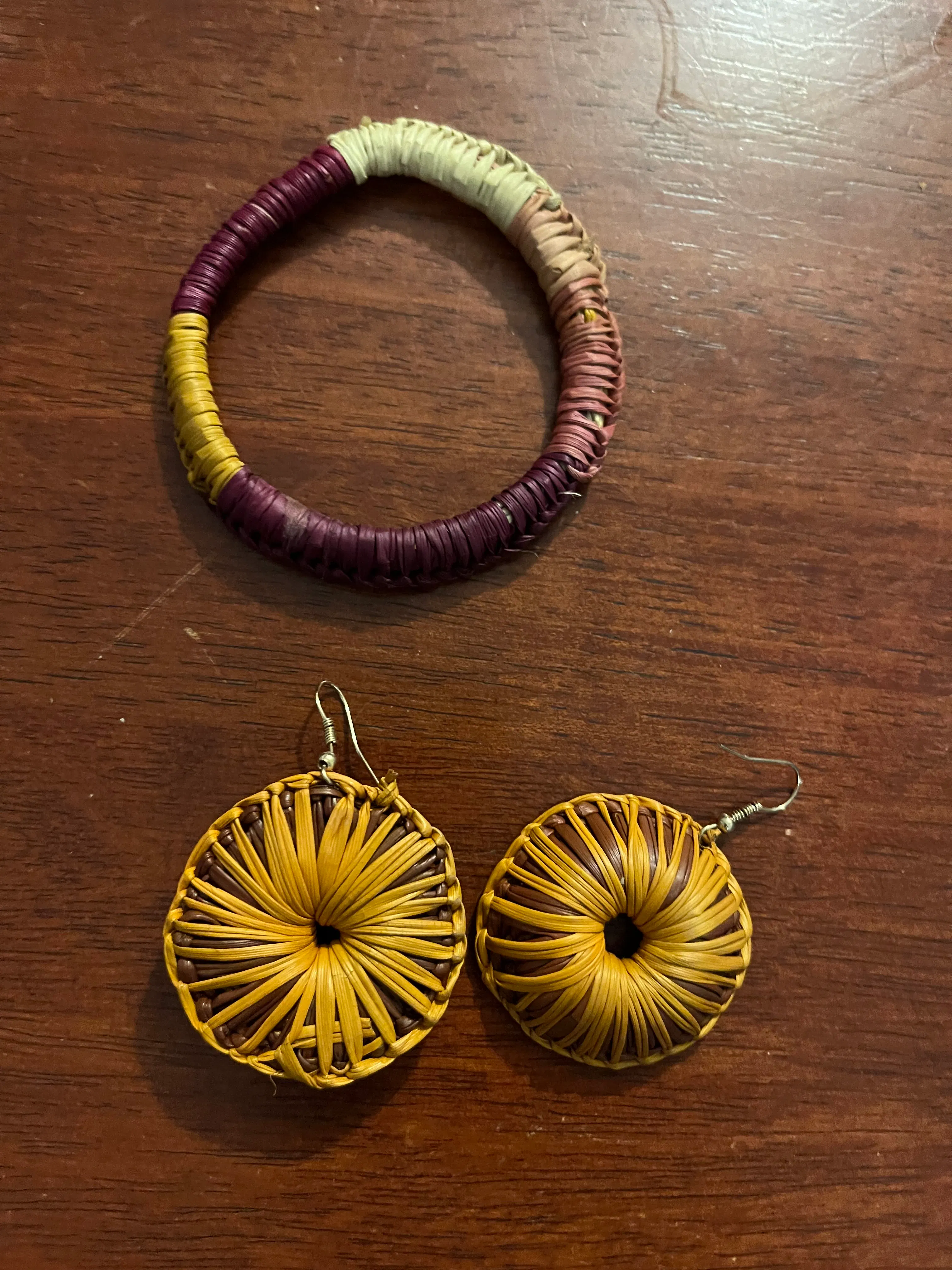
Examples from the professionals, as purchased at the cultural centre on Wednesday.
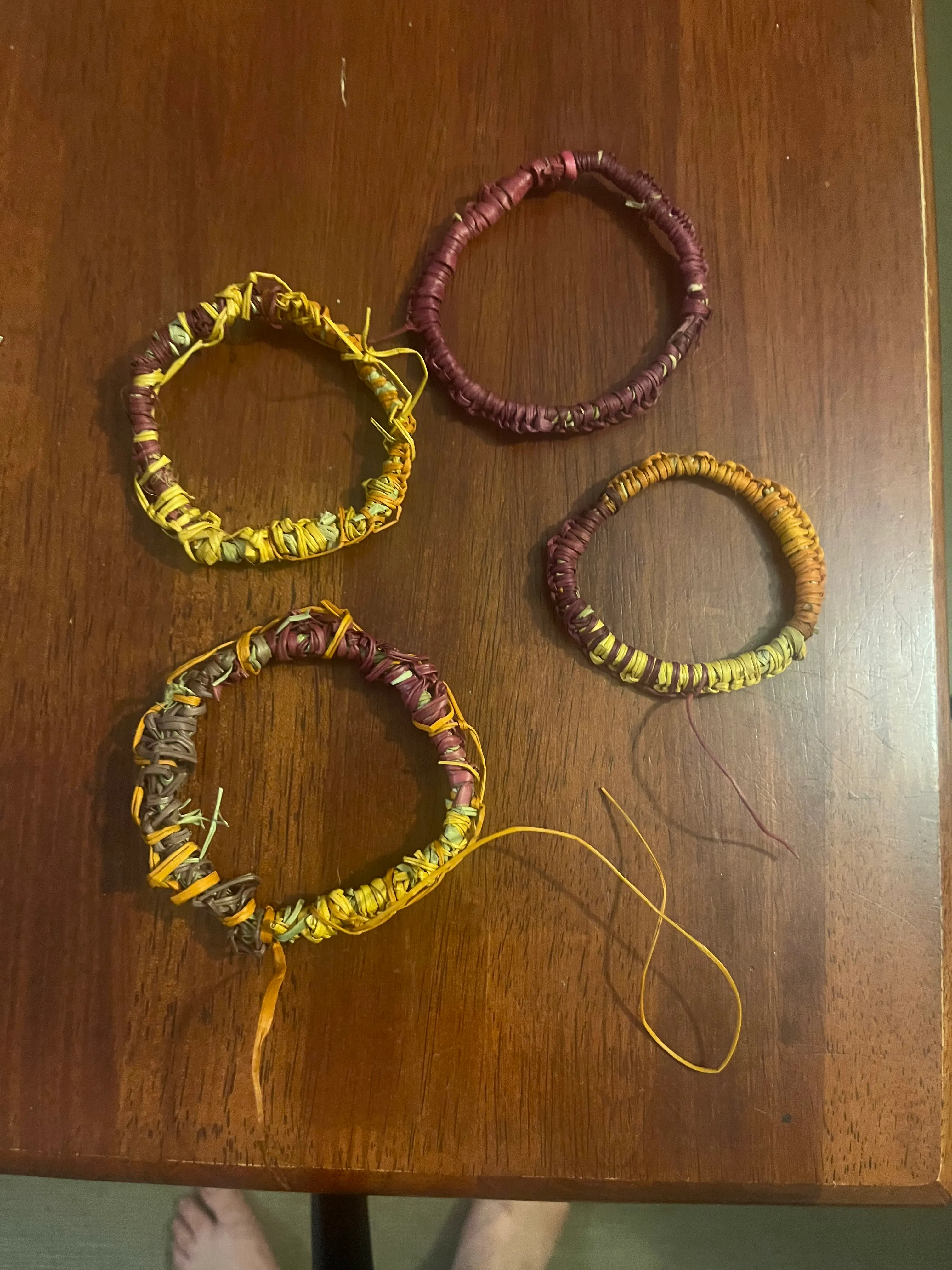
The attempts by Nora and I - not too bad for a first try!
I was excited to see a 3D map of the area at the visitor centre, which really helped me get my head around the geography of the area. When we were in Nitmiluk (Katherine) Gorge our guide explained that the Gorge was a crevasse at the southern end of the Arnhem Plateau, a huge sandstone escarpment that goes from Katherine up into Arnhem Land. And when we walked to Jim Jim Falls we drove along the side of the escarpment, and then walk along the river that travelled along the edge of it. But until I saw this map I couldn't really understand how all of the rivers, floodplains and huge sandstone cliffs all fit together. Hoorah for 3D models!
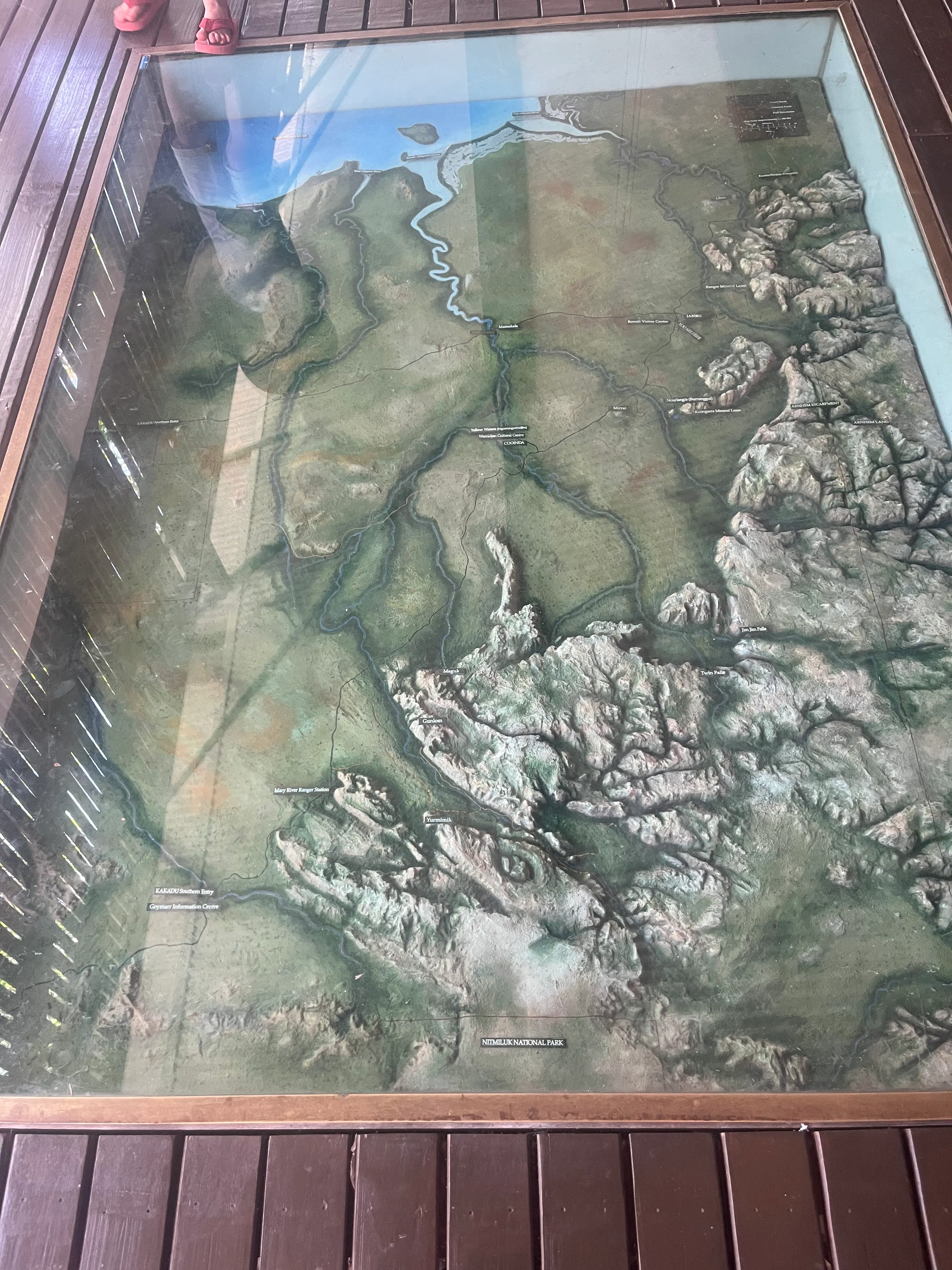
It might be a bit tricky to see, but the raised light grey sections on the right side of the model represents the section of the Arnhem Plateau that is included in the Kakadu National Park.
After a swim at the pool at the caravan park we attempted to time a visit to the Burrungkuy rock art site just in time to watch the sun set over the plains, but we were a bit too late🙄😂 . We still got to see some amazing rock art and setting sun reflected off the beautiful sandstone cliffs, but no official sunset. But we know there will be others!
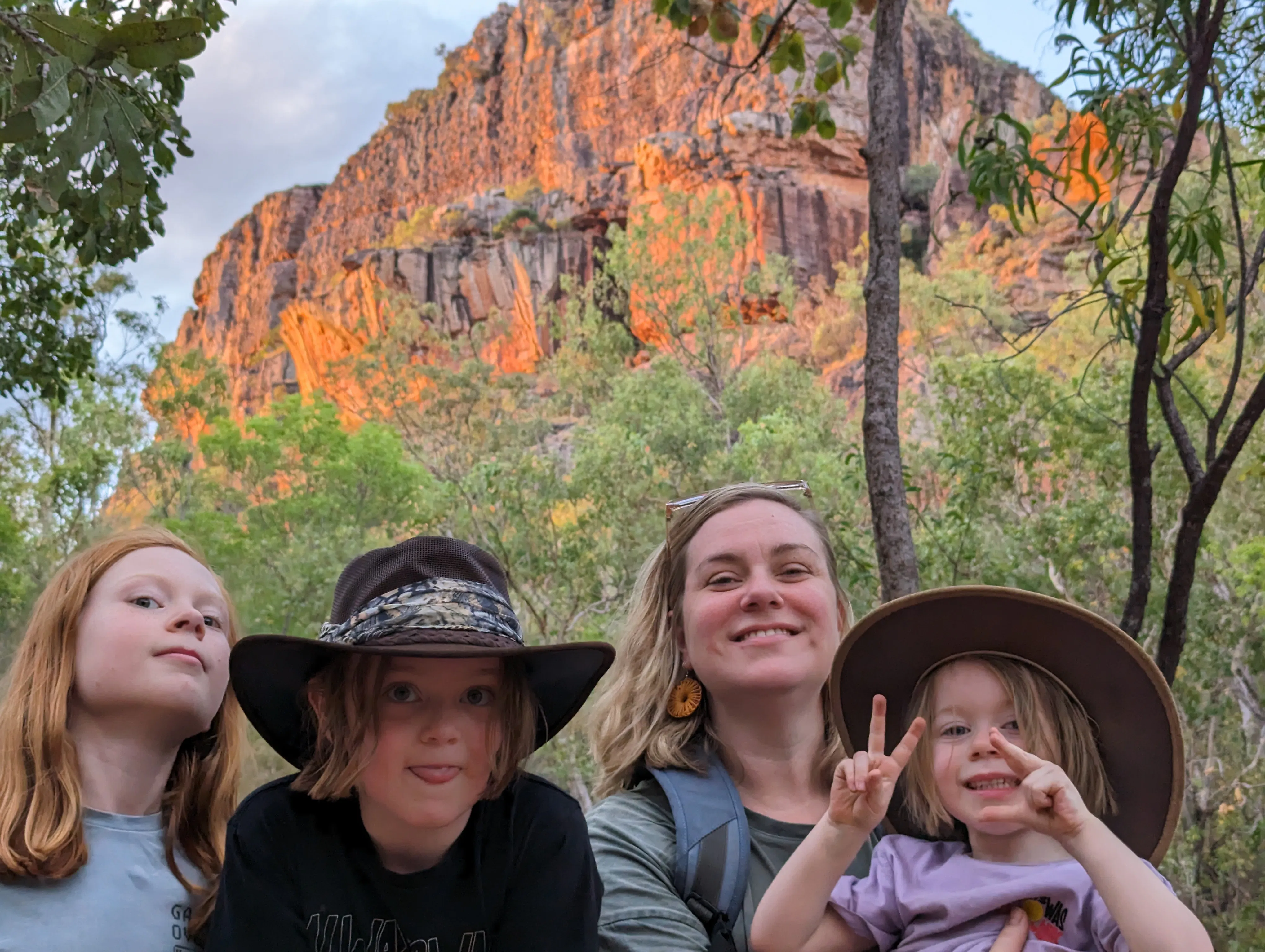
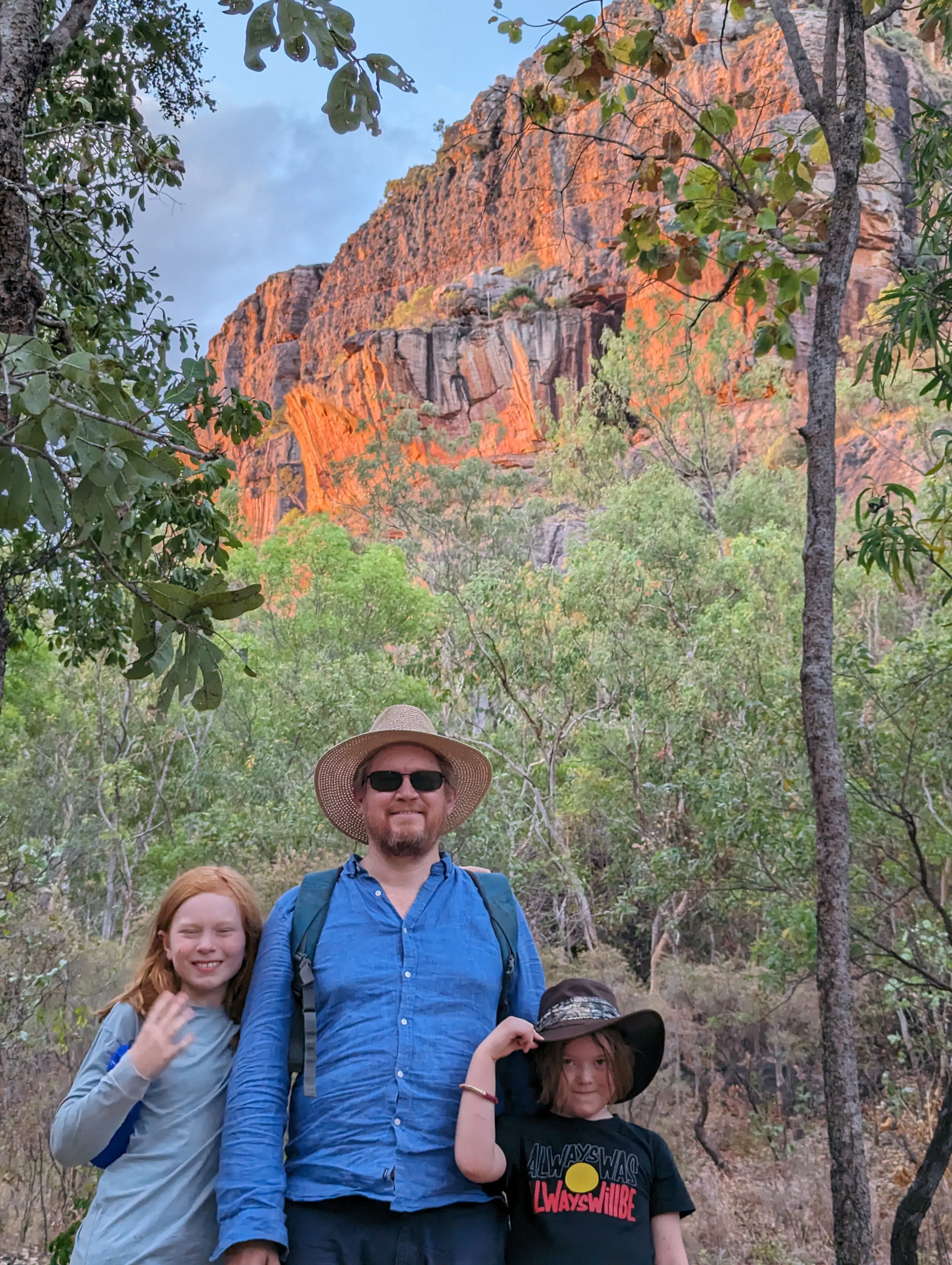
Friday was a highlight of the trip to date and, to be honest, of my life, as we were lucky enough to do a day tour into Arnhem Land through the Aboriginal-owned company Kakadu Cultural Tours. We were picked up in a big 4WD truck by our guide, a lovely non-Aboriginal man called Niall. We hit the road but just after the turn off towards the border Niall stopped on the side of the road to show us a particular rock formation on the escarpment, which was a key element of one of the creation stories of the area. He used this as an example to explain the importance of songlines, which have been used by Aboriginal people for tens of thousands of years to share information about country. Songs were handed down from elders to be sung when travelling through country to provide important information about seasons, landscape, food sources, ceremony and culture, as well as providing directions for safe passage. Not surprisingly, many present day roads follow these traditional songlines, something we also heard about at the Stockman's Hall of Fame in Longreach where we learned that stock-routes and main roads throughout the outback often follow traditional songlines.
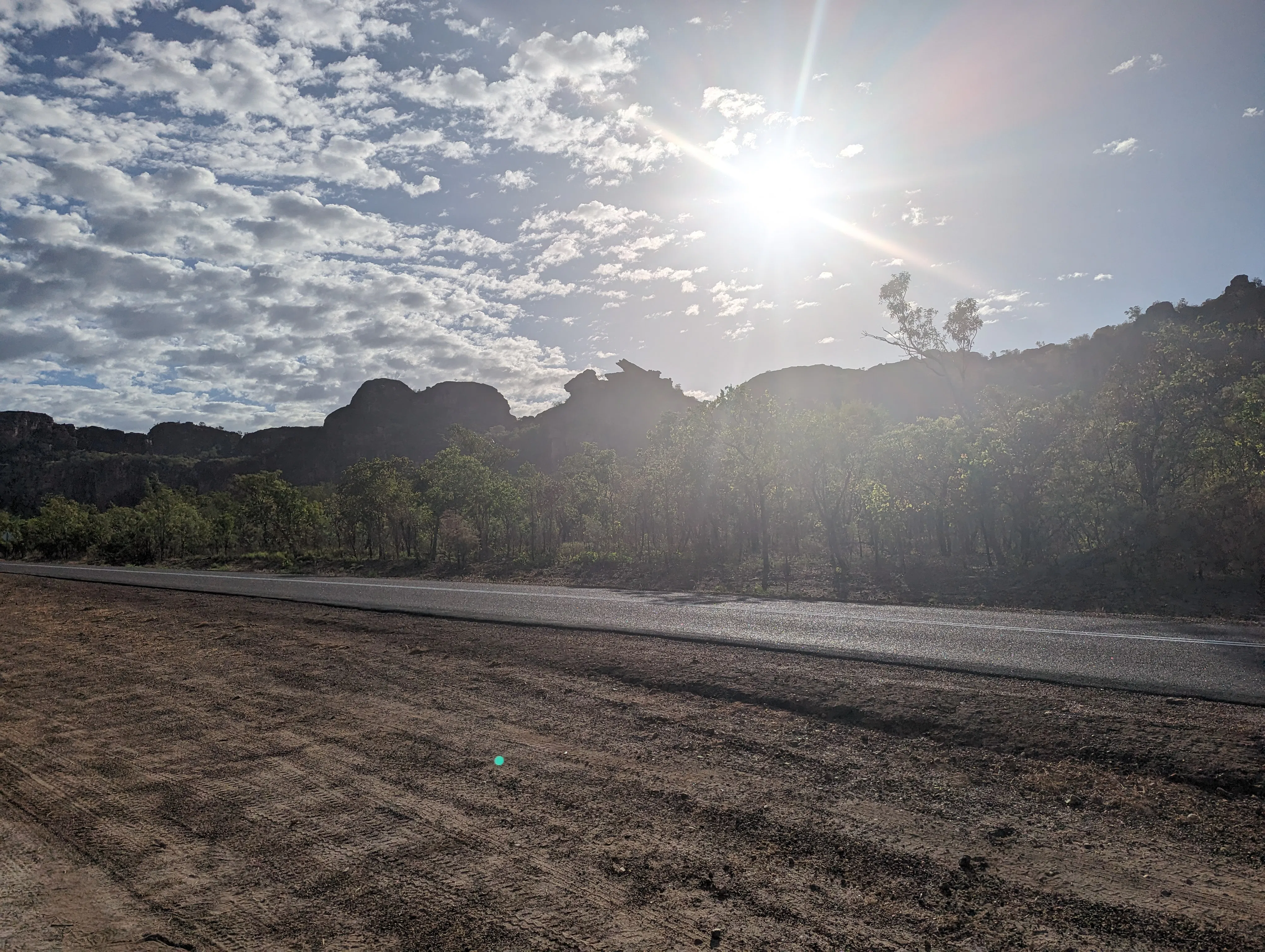
According to the songlines, the rock at a 45 degree angle from the escarpment in the distance is a canoe left behind by a creation spirit who was stranded in when the oceans receded. The spirit then traveled the lands, sharing culture and lore with the local people.
We jumped back into the truck and headed up to Cahill Crossing, where we drove across the East Alligator River to officially cross into Arnhem Land. Arnhem Land was declared an Aboriginal reserve in 1931, and an Aboriginal Land Trust was form to manage the country. It is one of the largest areas of privately owned Aboriginal land in Australia, and includes land belonging to a number of different traditional owners. You may have been reading about Garma, the big festival recently held in Arnhem Land and attended by some of the nation's political leaders. That's on Yolngu country, in East Arnhem land towards the coast of the Gulf of Carpentaria. We were lucky to be visiting west Arnhem Land which owned by the Bininj people.
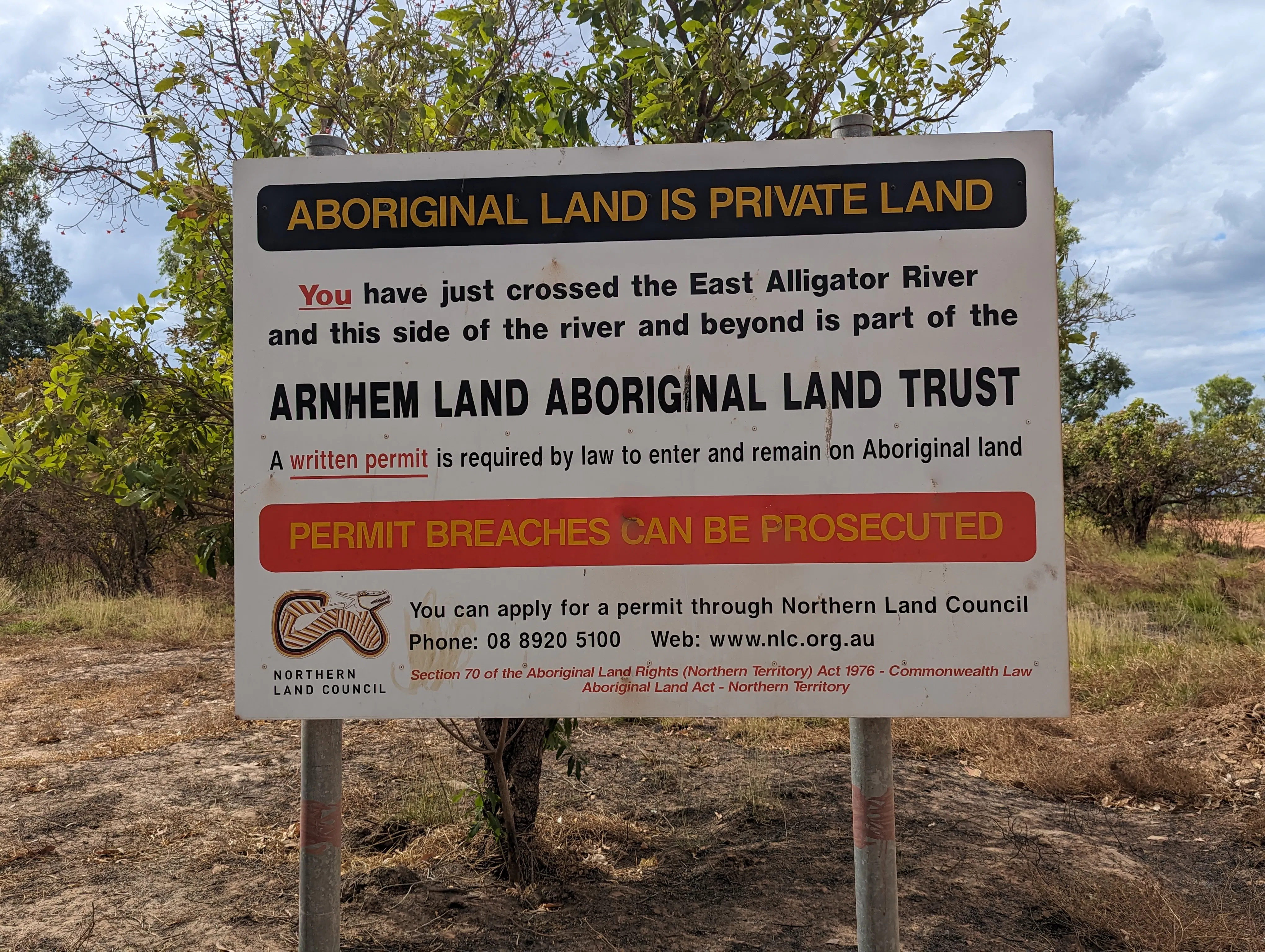
This felt like such a powerful statement, and we felt so fortunate to have been granted permission to visit this place.
We drove northeast along a red dirt road through the most spectacular landscape, with wide flat floodplains on our left and the huge sandstone cliffs of the escarpment on our right. We had a quick stop to climb a rocky outcropping to get a better look at the East Alligator River and the surrounding floodplains.
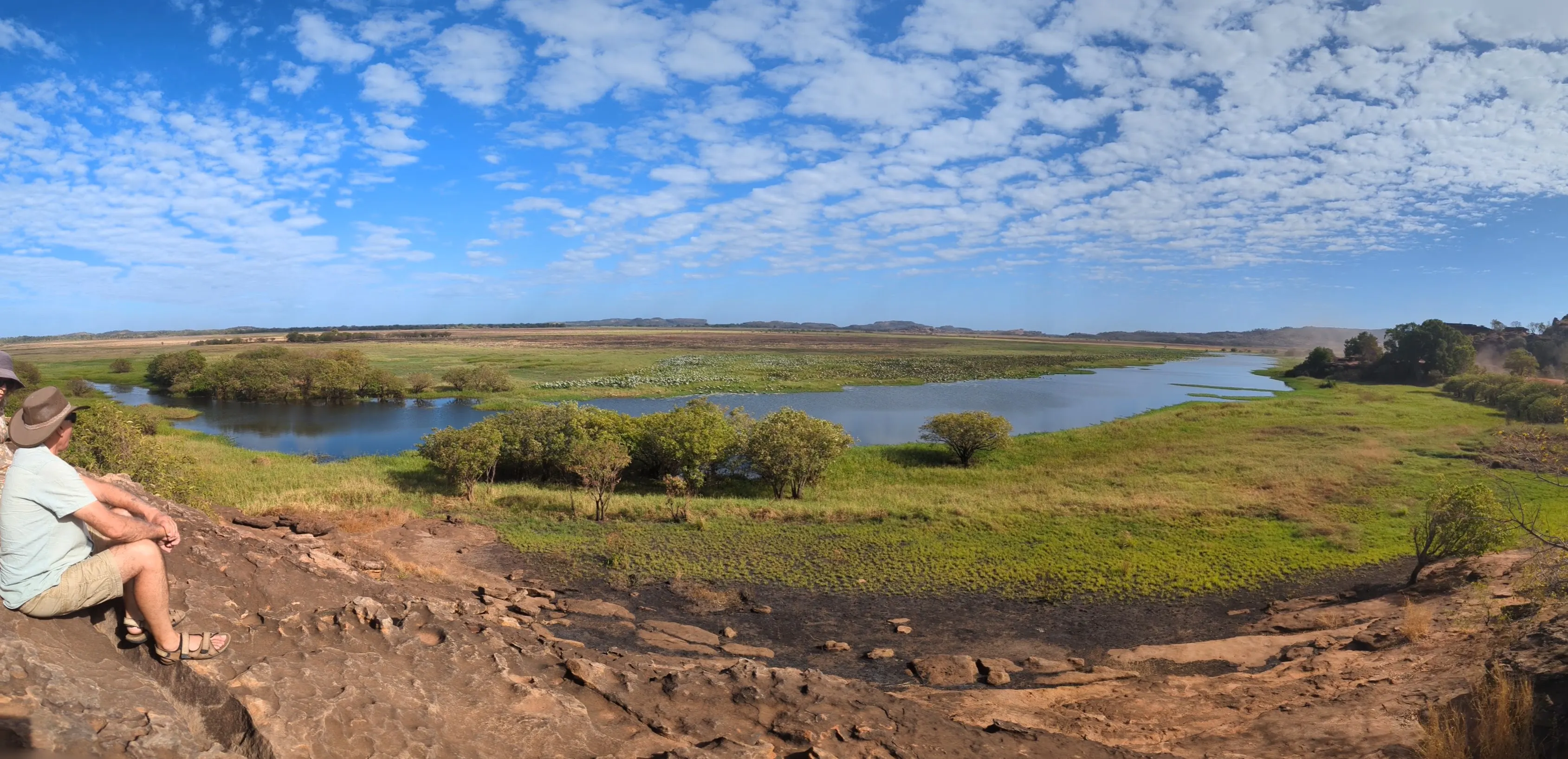
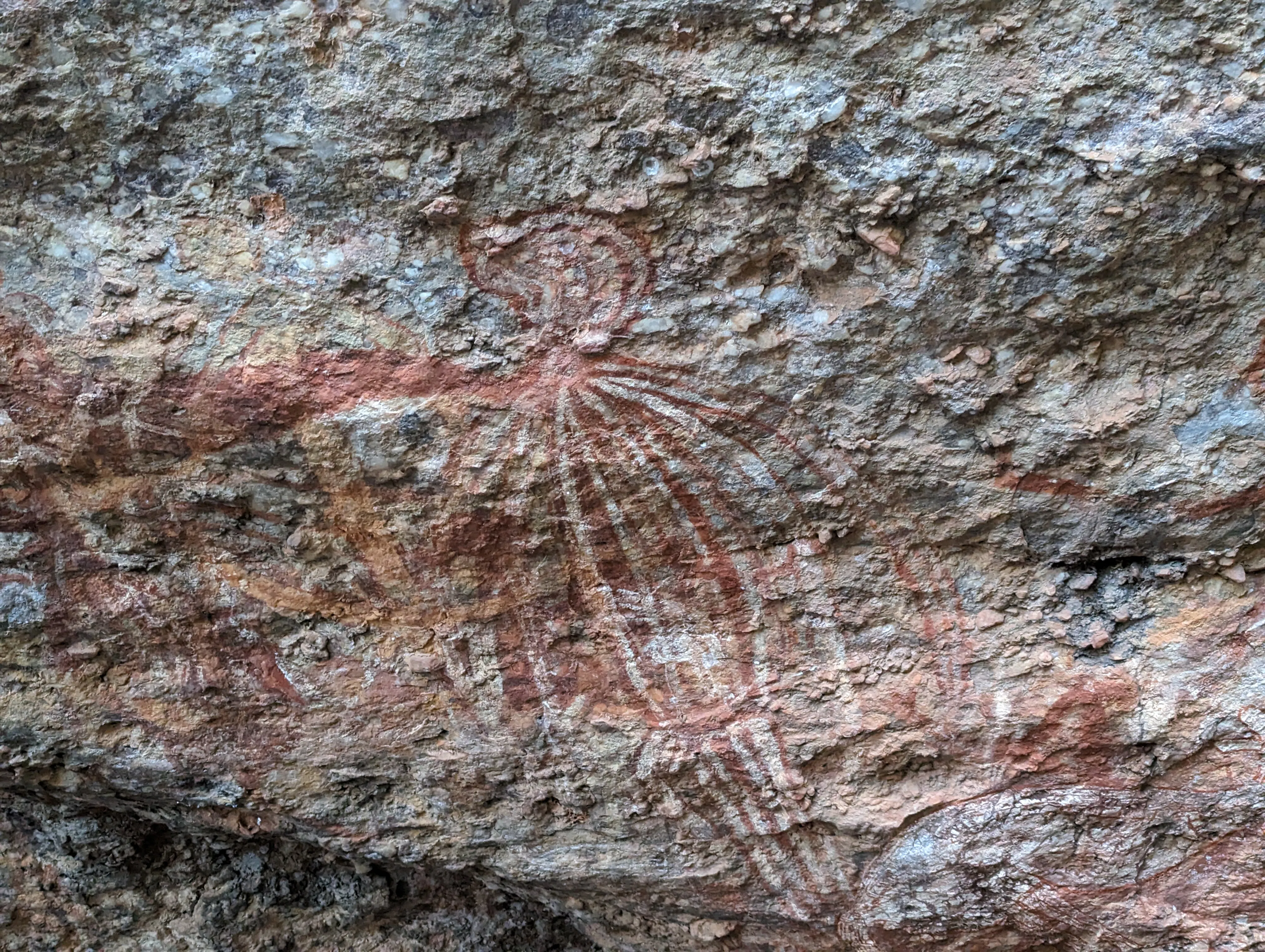
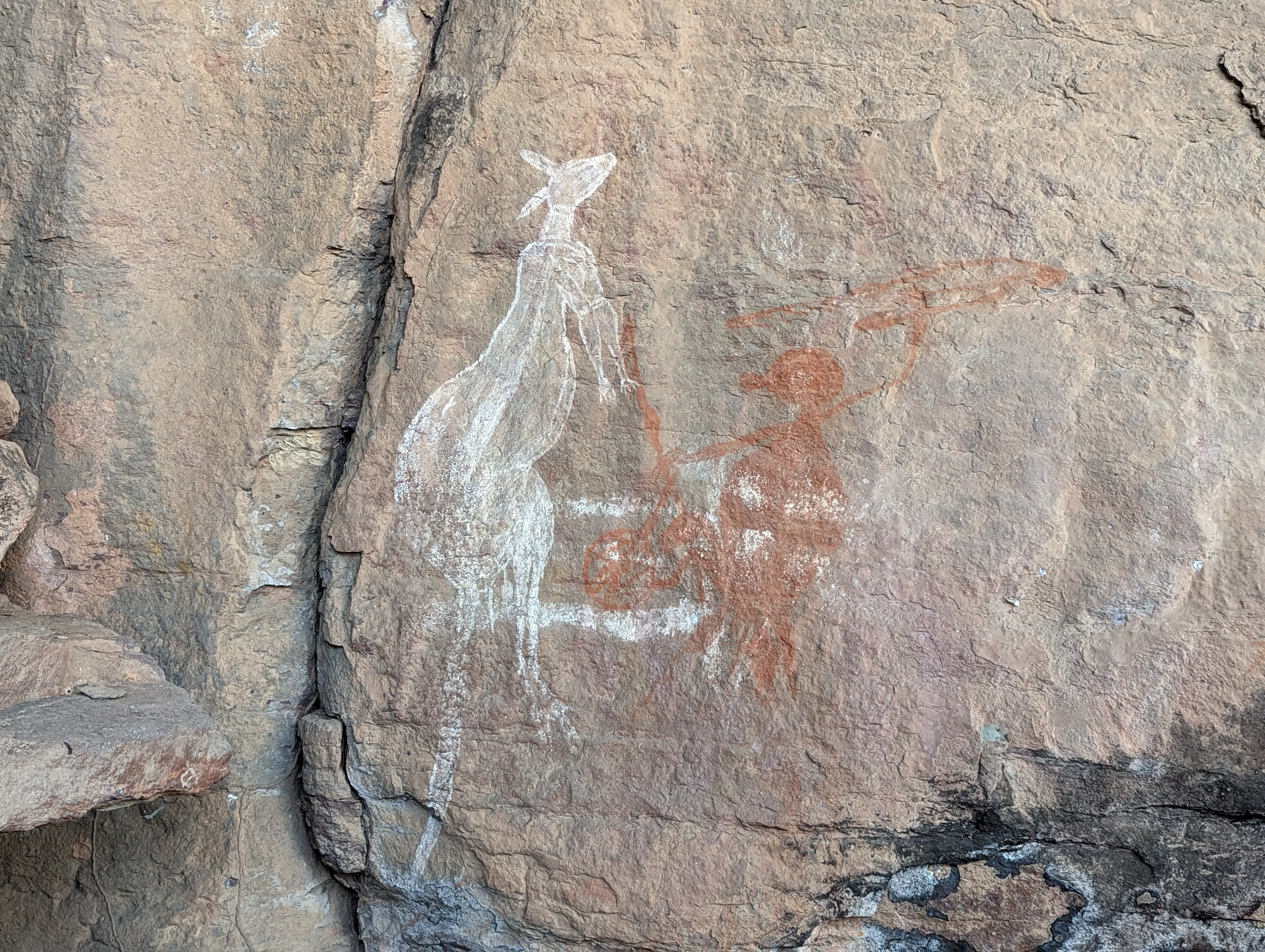
After a bit of morning tea (nothing quite like dunking scotch finger biscuits into tea from a thermos) and a brief sighting of a wallaby with a joey in her pouch, we did some moderately intense rock hopping to get to a rock art gallery in a cave overlooking the floodplains. And it was simply astounding. Seeing layers of art spanning thousands if not tens of thousands of years, depicting creation spirits, people, animals and plants, in one of the most remote and untouched places in the country, made for a very intense and amazing experience.
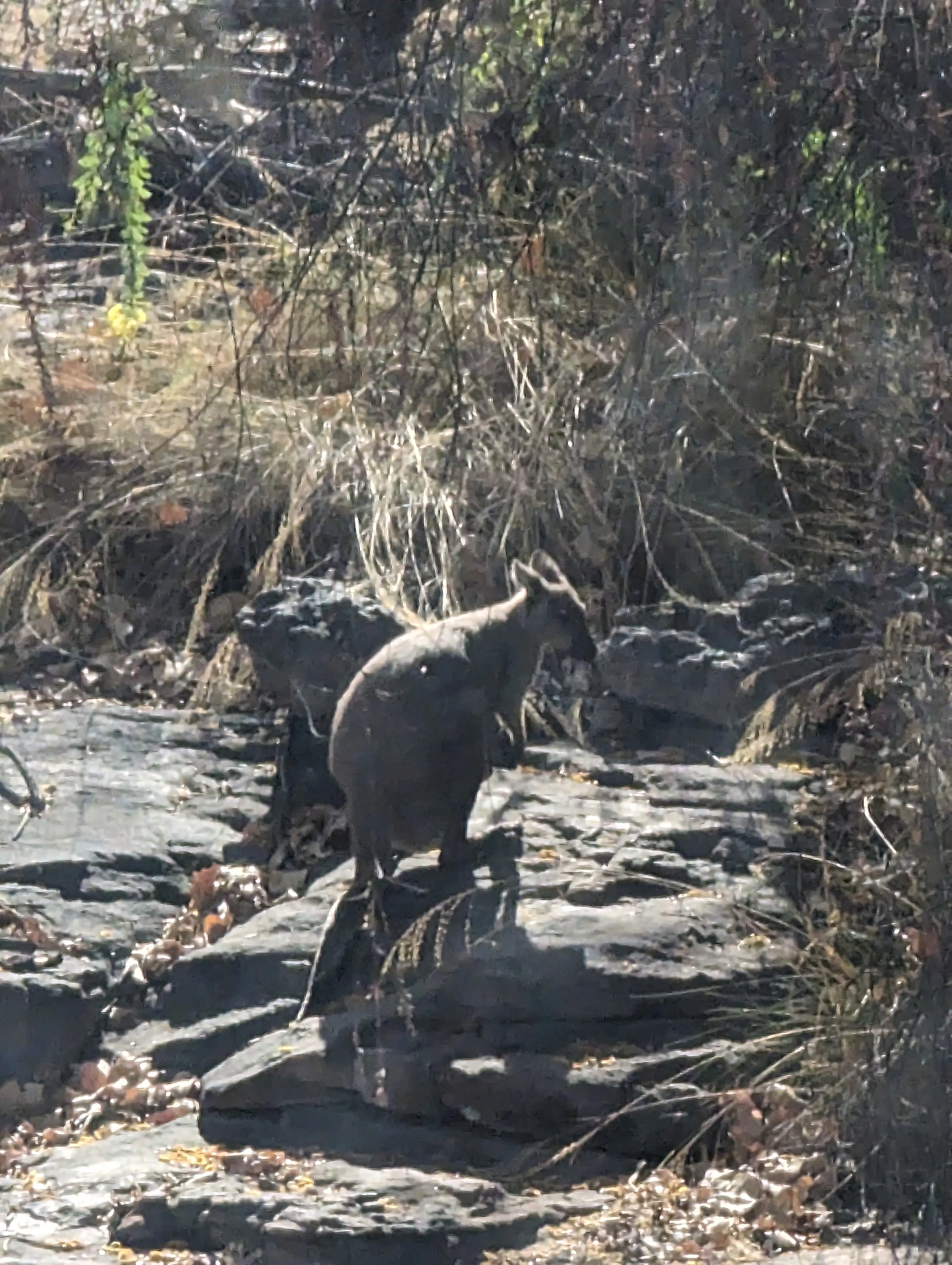
Mumma wallaby
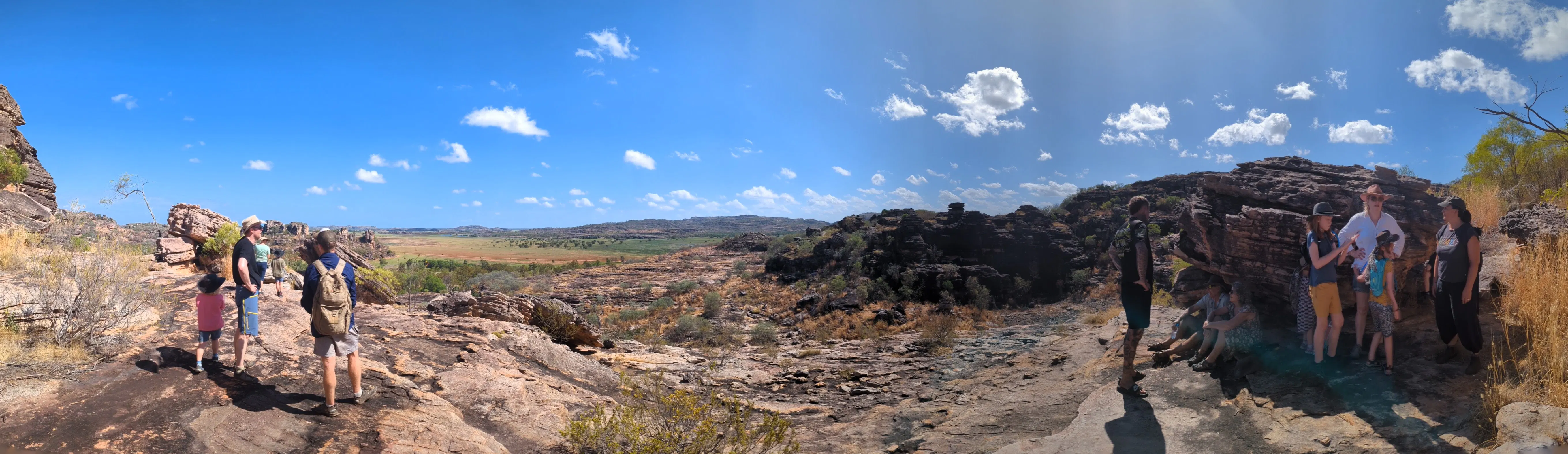
A panorama of the outlook from halfway up.
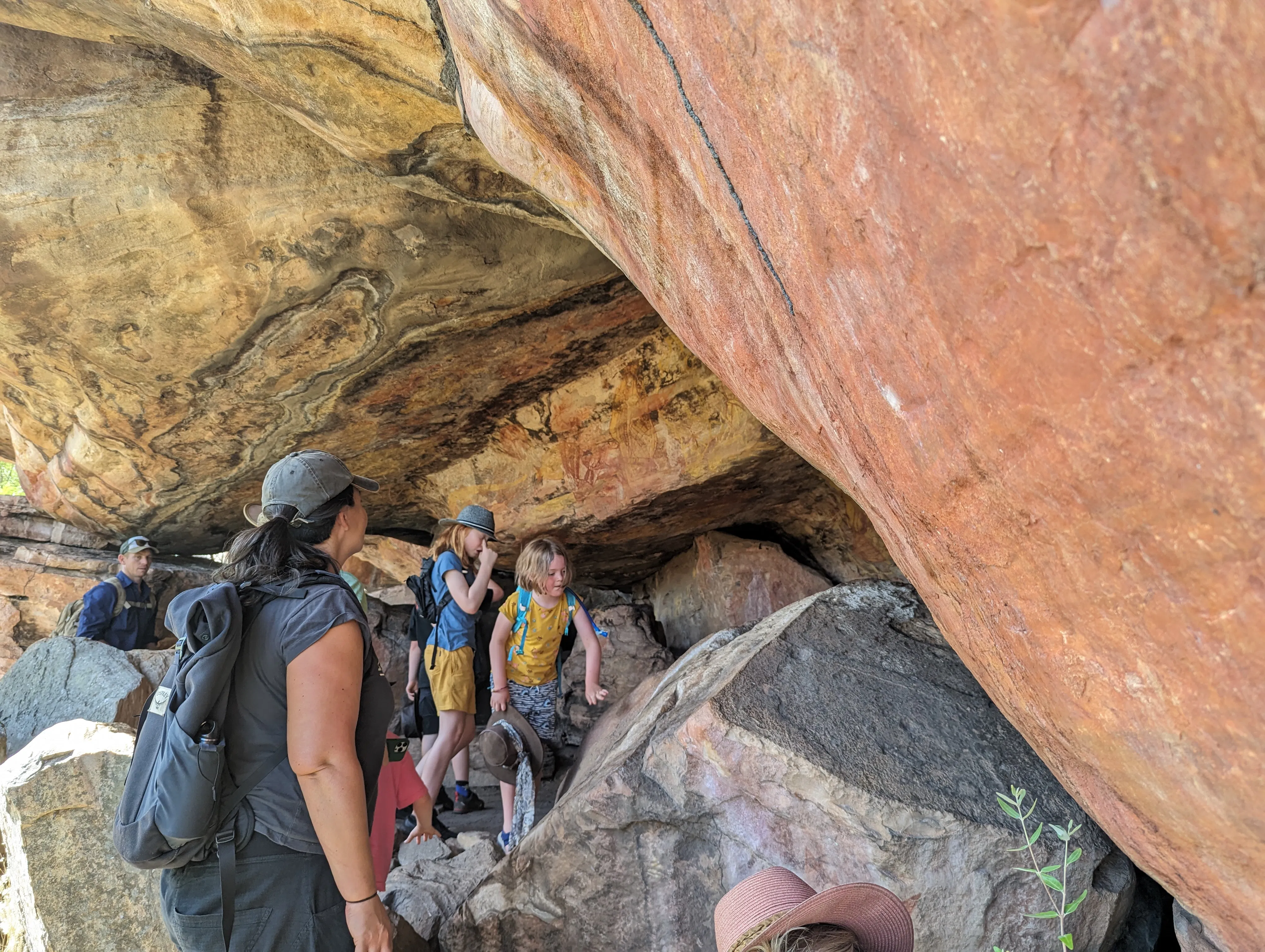
These caves are very protected from the elements, and would have provided shelter from the heat and the rain, so the artwork has been preserved for up to 20,000 years,
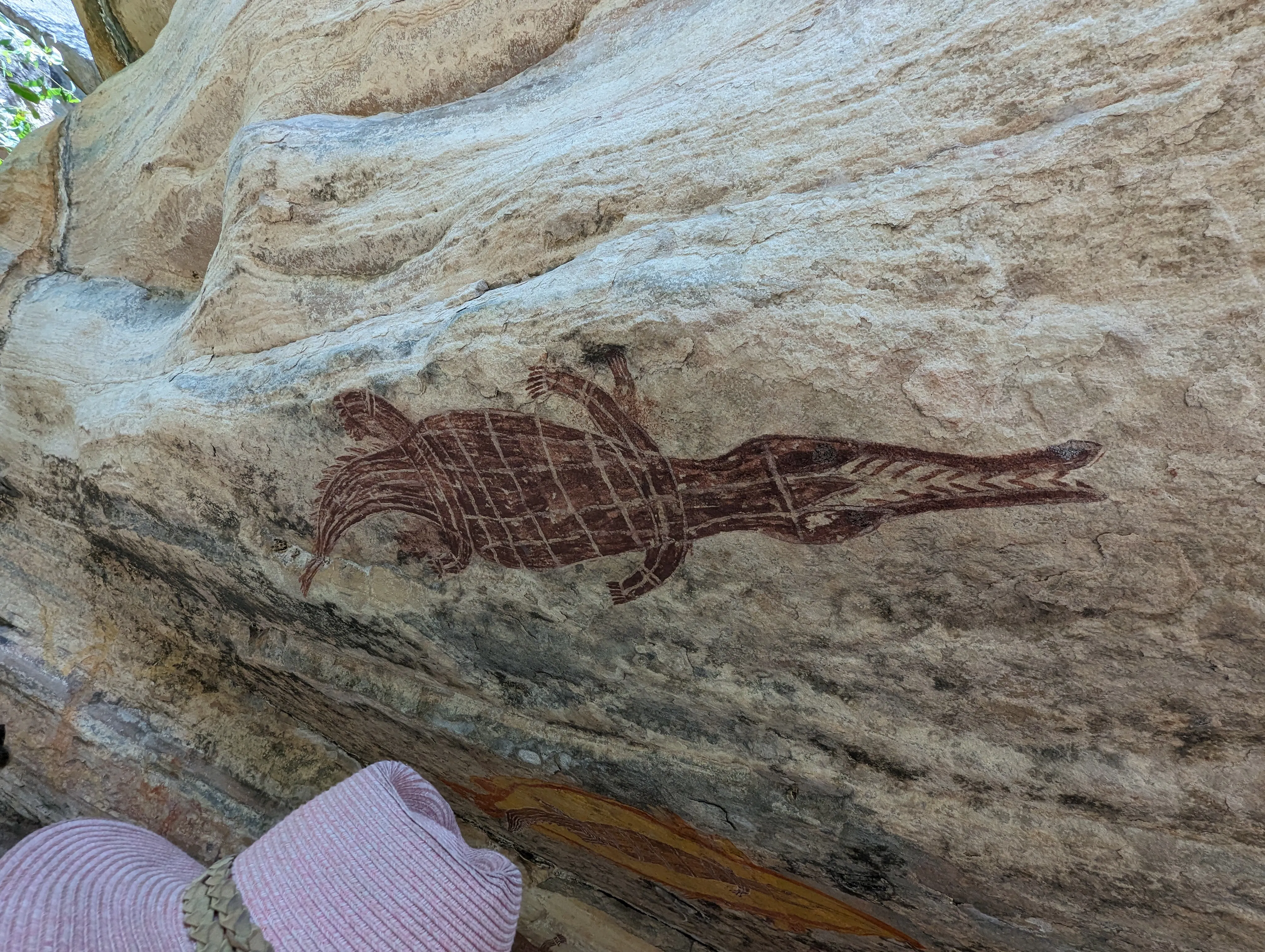
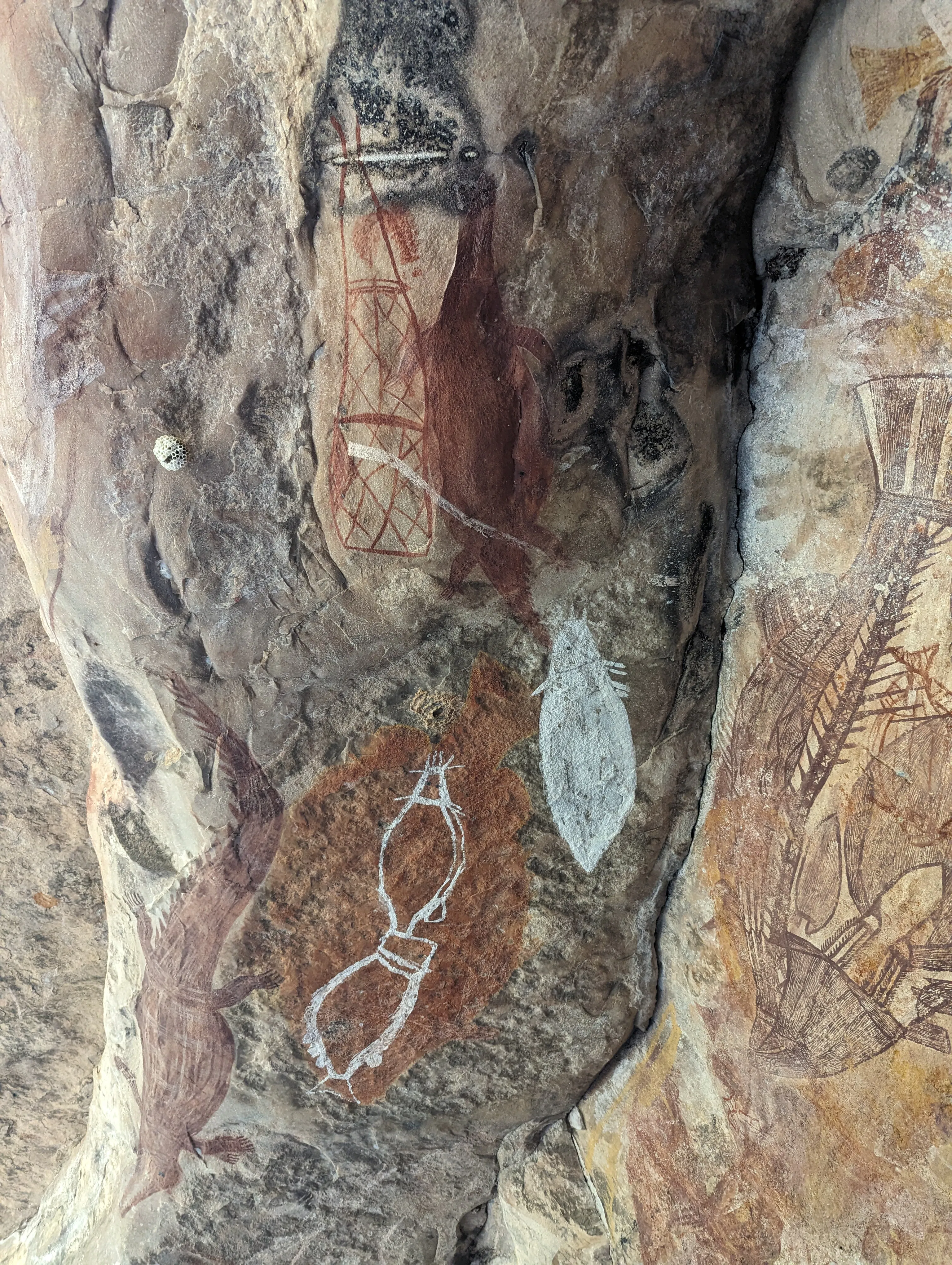
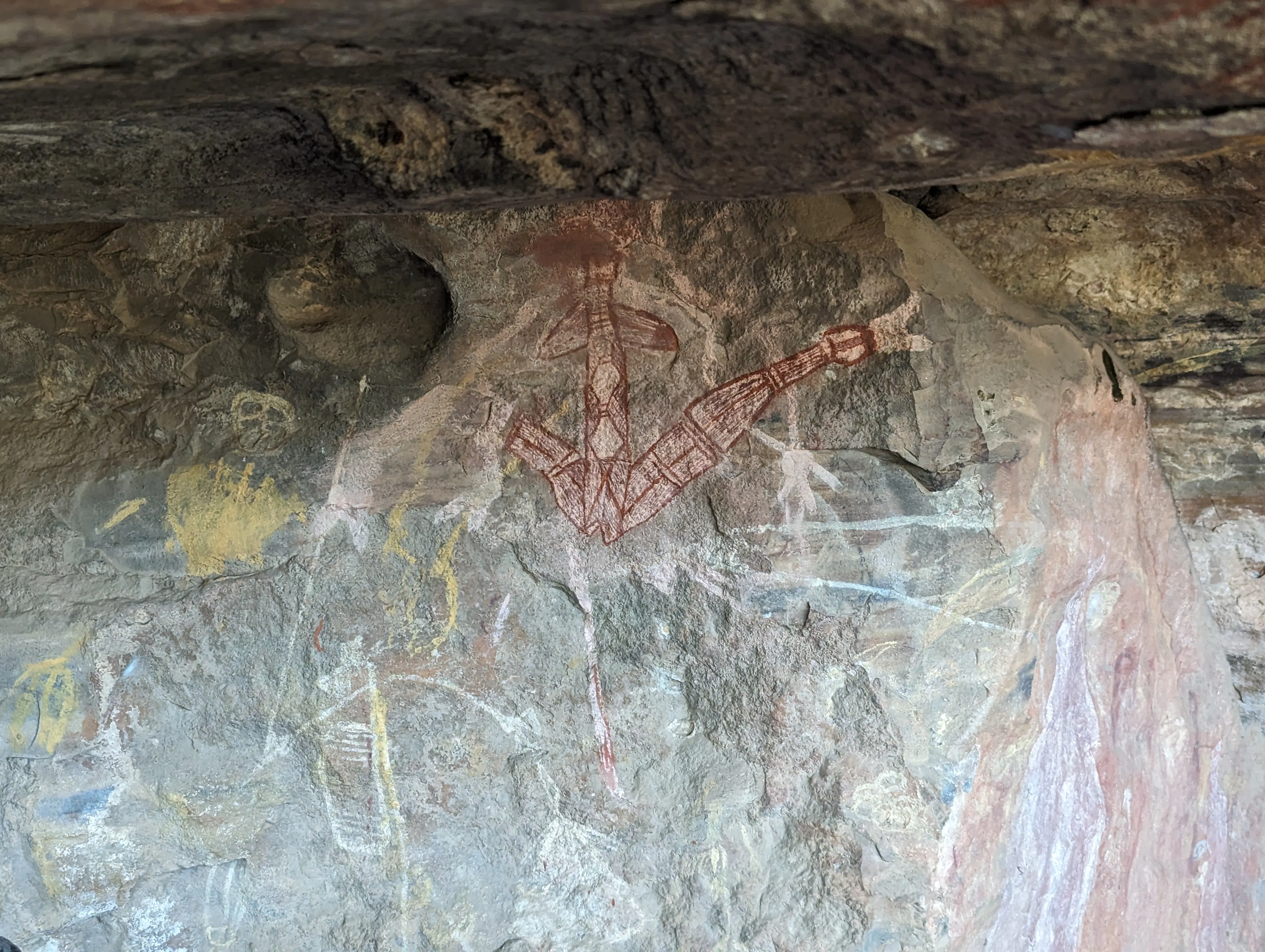
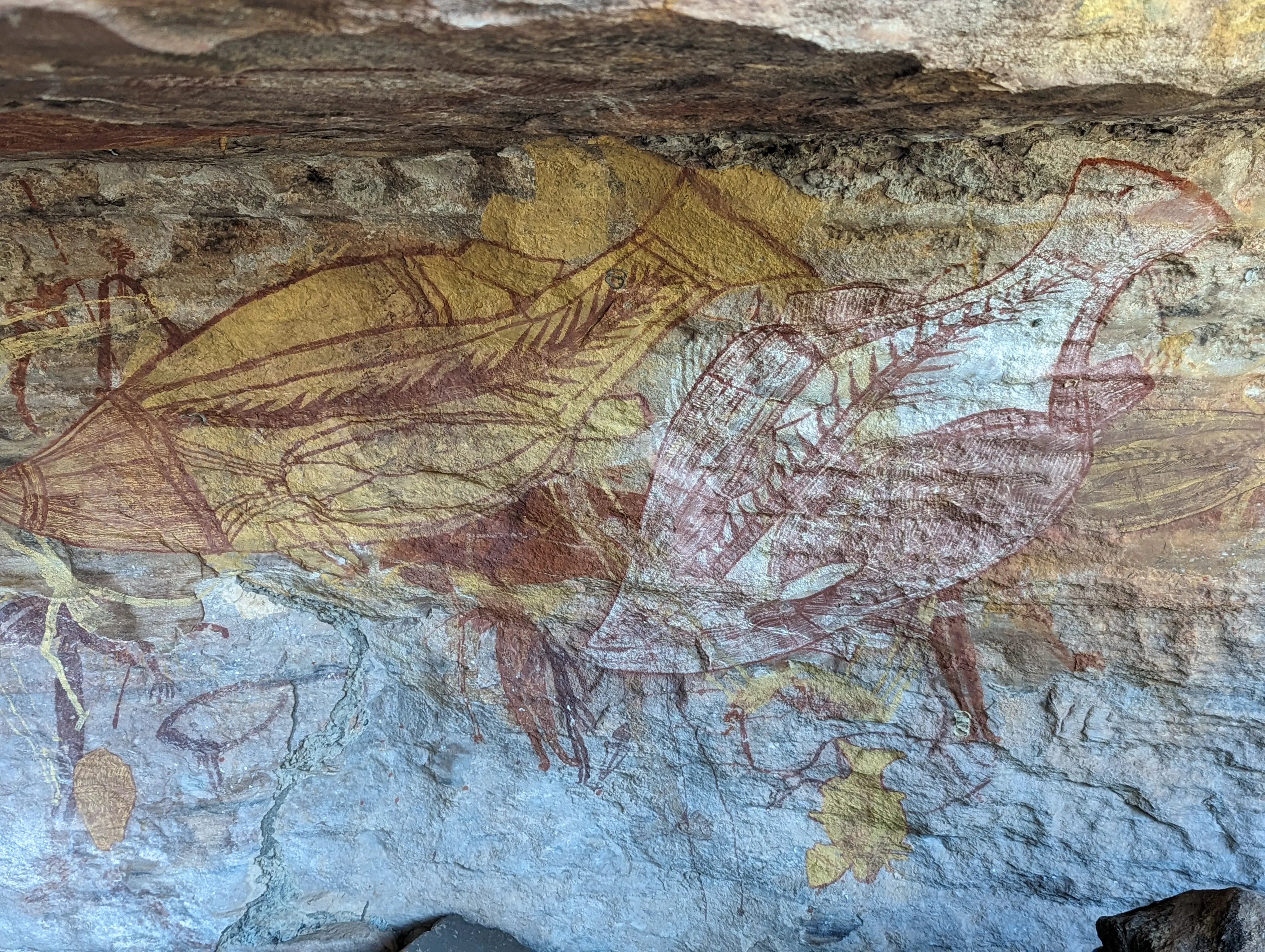
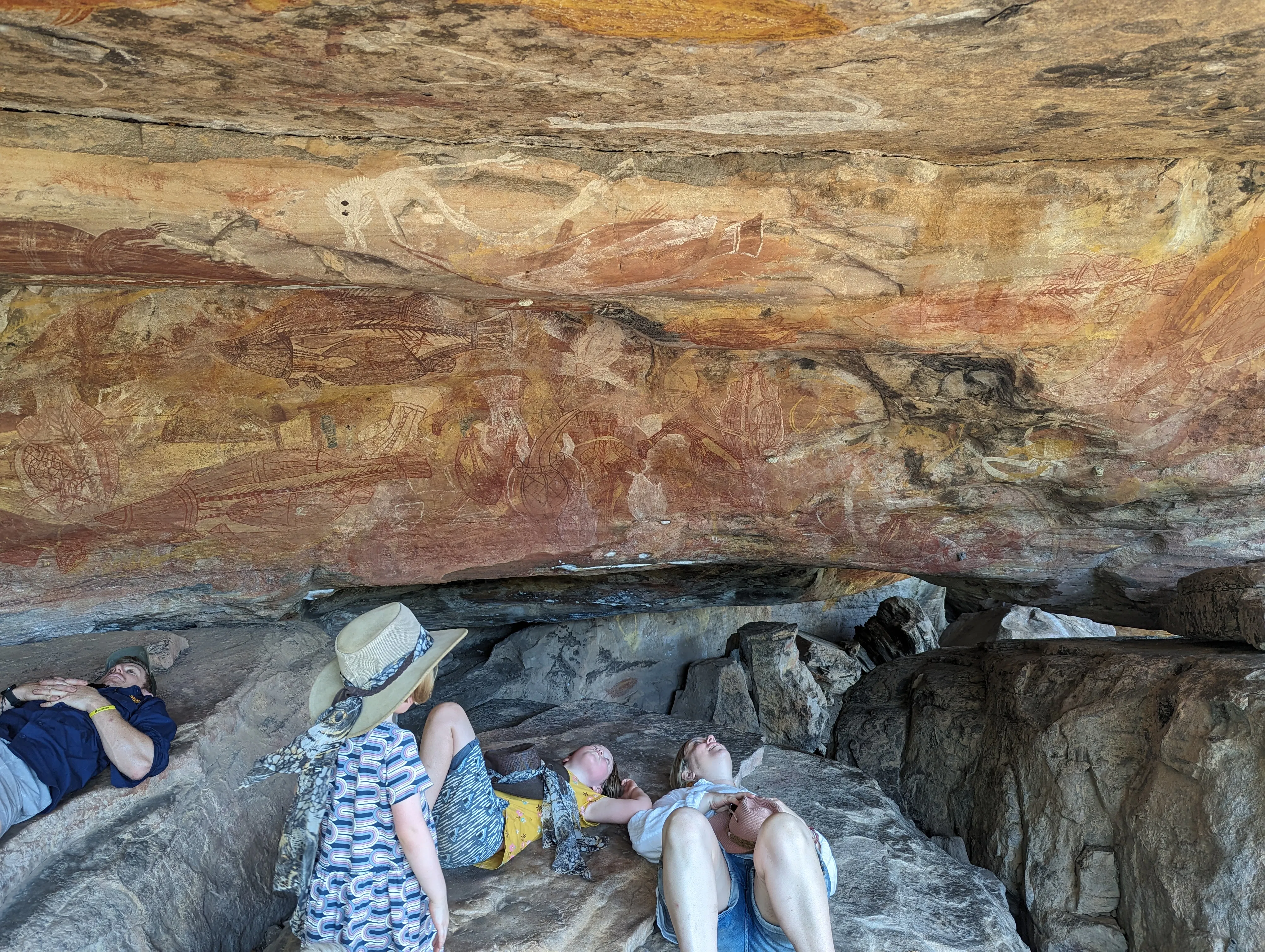
Laying down on an ancient rock in a gentle breeze looking at thousands of years worth of art and stories and culture - it was a pretty special moment.
After a family photo on the edge of the escarpment we headed back down and into the truck to make our way to Gunbalanya which is one of the biggest towns in Arnhem Land and home to the Injalak Arts Centre. I bought some lovely screen printed linen that I am hoping Alice will be able to turn into a cushion cover. Toby had a go at playing a didgeridoo and was actually able to make quite a lovely sound with it, probably due to his euphonium playing over the last few years. Given it was quite a small didge and not the straightest it wasn't as expensive as some of the other ones, and Bob made a strong case for getting it for him. So now we have a didgeridoo nestled in the back of the Landcruiser, and I no longer feel feel bad about not letting Toby bring Poppy's trumpet on the trip!
We turned to head for home, stopping first at what was traditionally a place of men's ceremony, where as part of initiation rites young men had to throw spears into an amazing rock formation towering above the ground. Given the main road is now right next to the rock, the initiation ceremonies are now held somewhere more secluded.
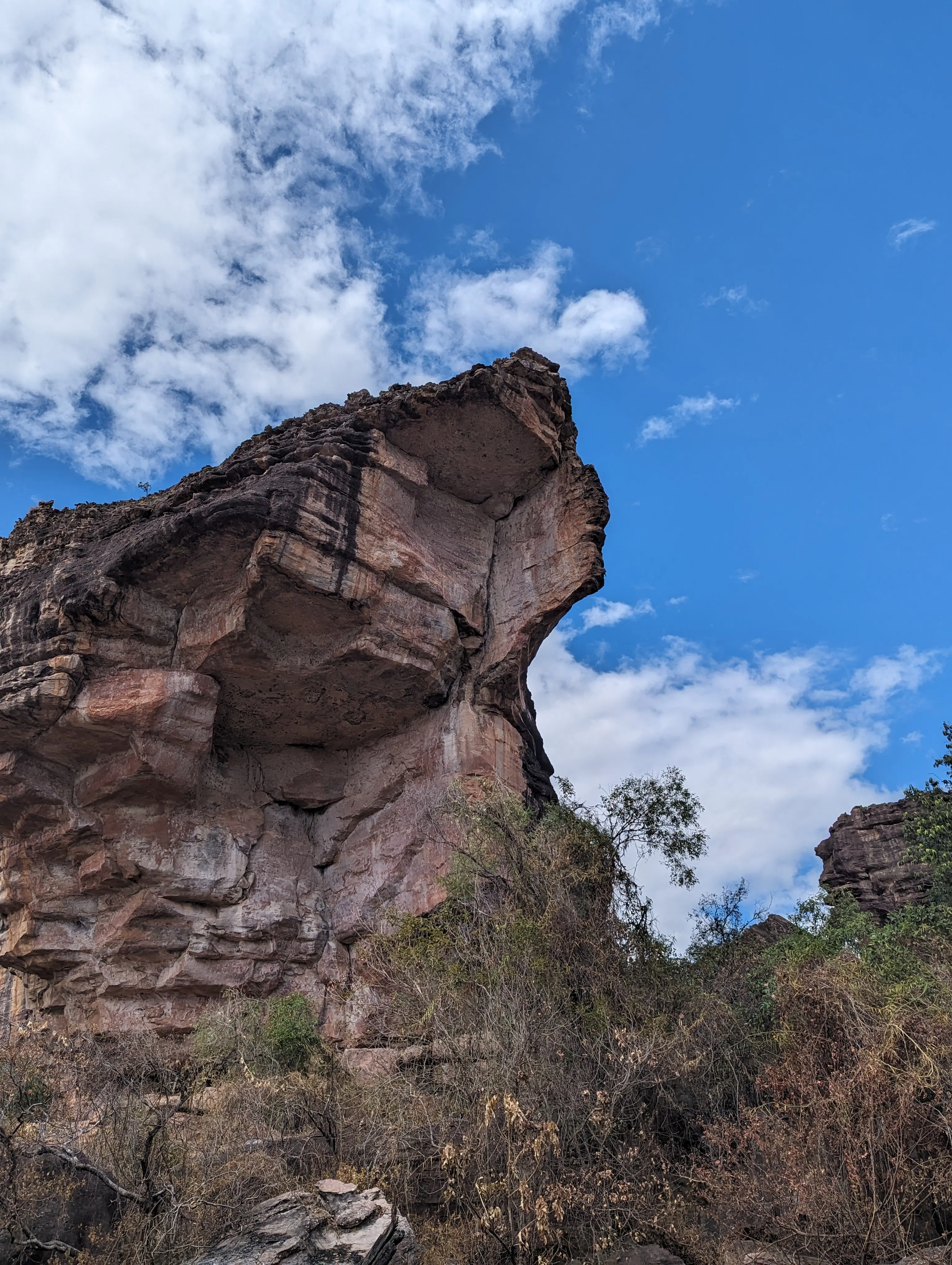
The initiates had 3 attempts to land a spear in the rock....
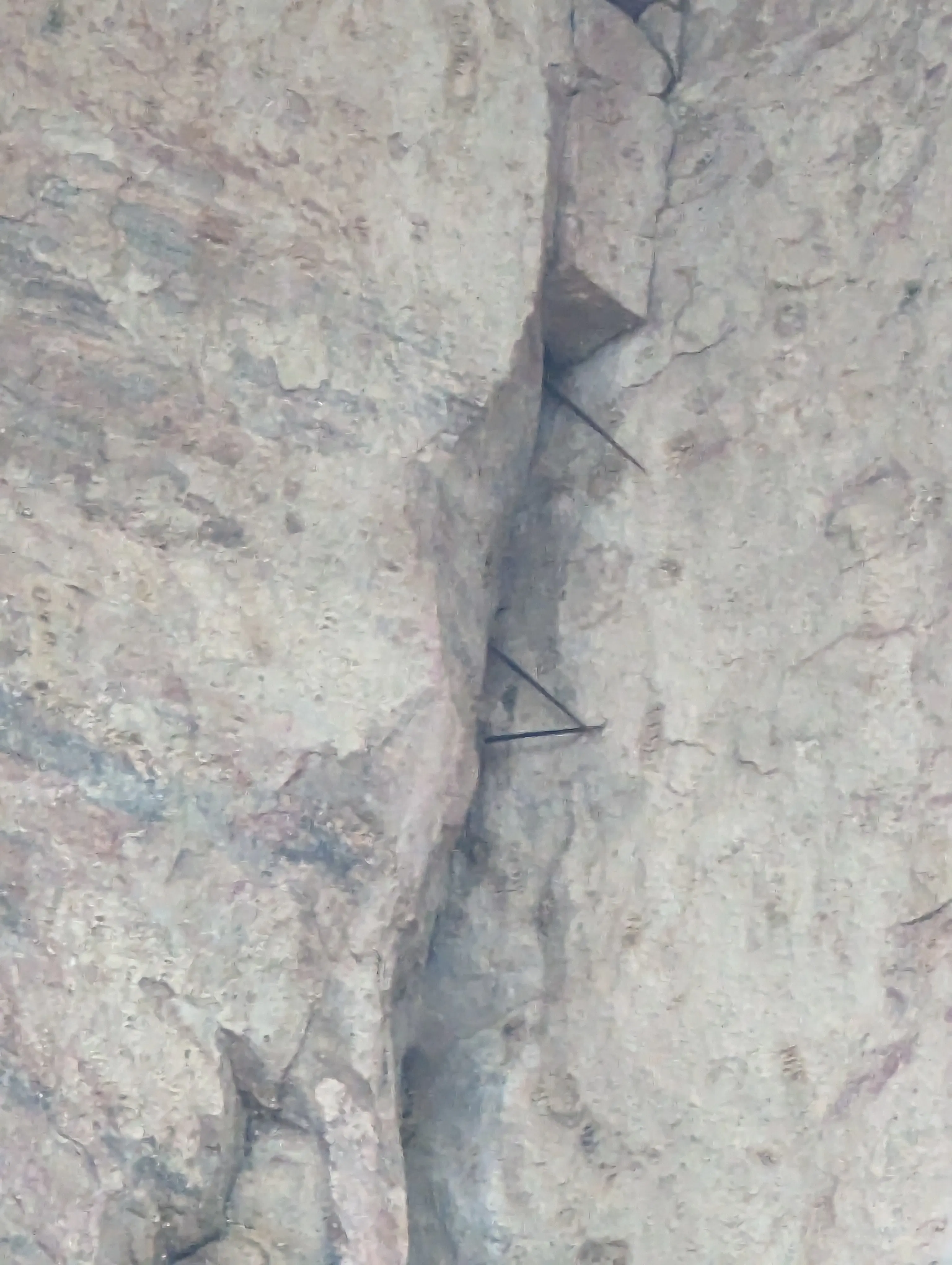
... and at least 7 were successful, as there are still spear heads remaining lodged in the rock!
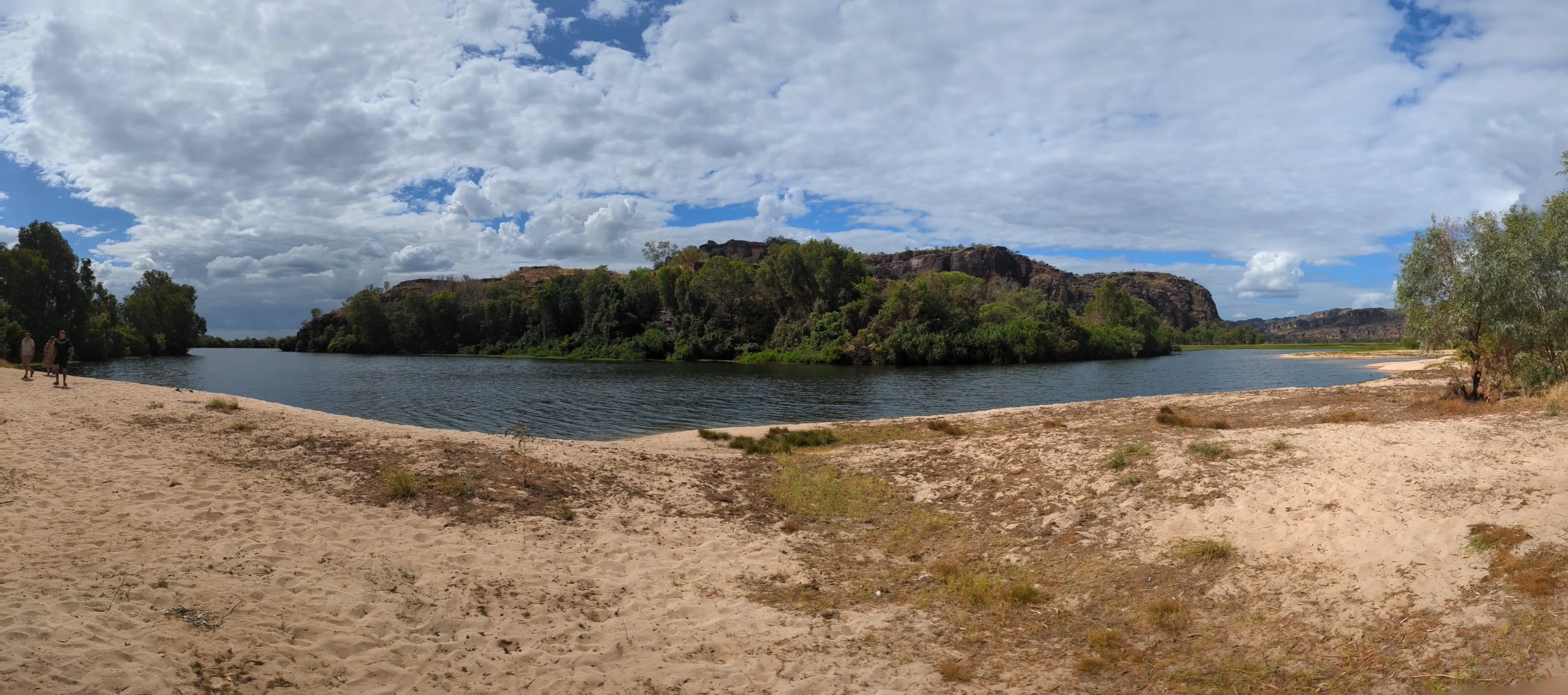
We also stopped at a beautiful sandy beach of the river and had a wander through the bush to see some more birdlife in the wetlands as well as some feral horses that were very beautiful, if not a bit hazardous to the ecosystem.
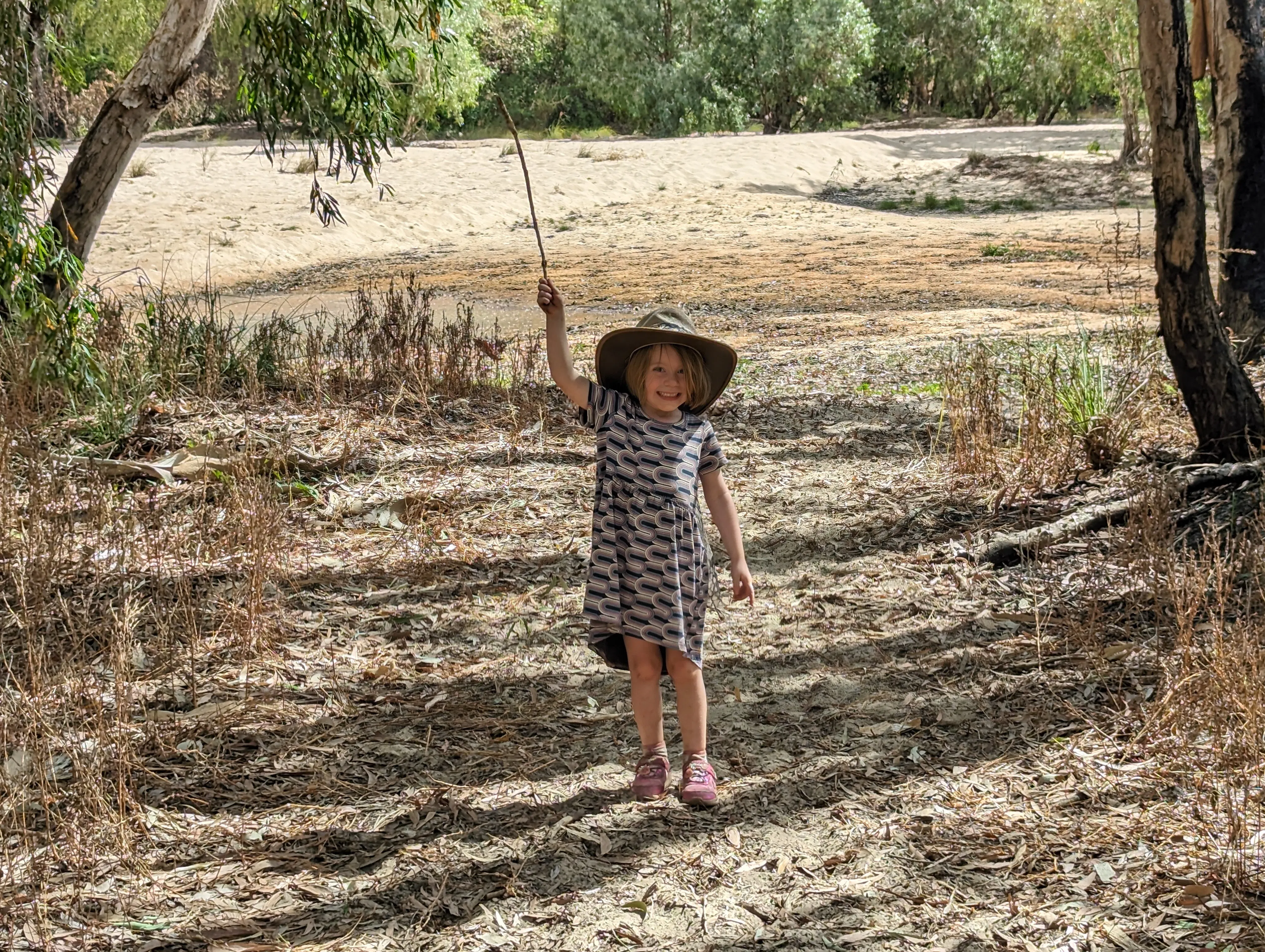
Our intrepid explorer!
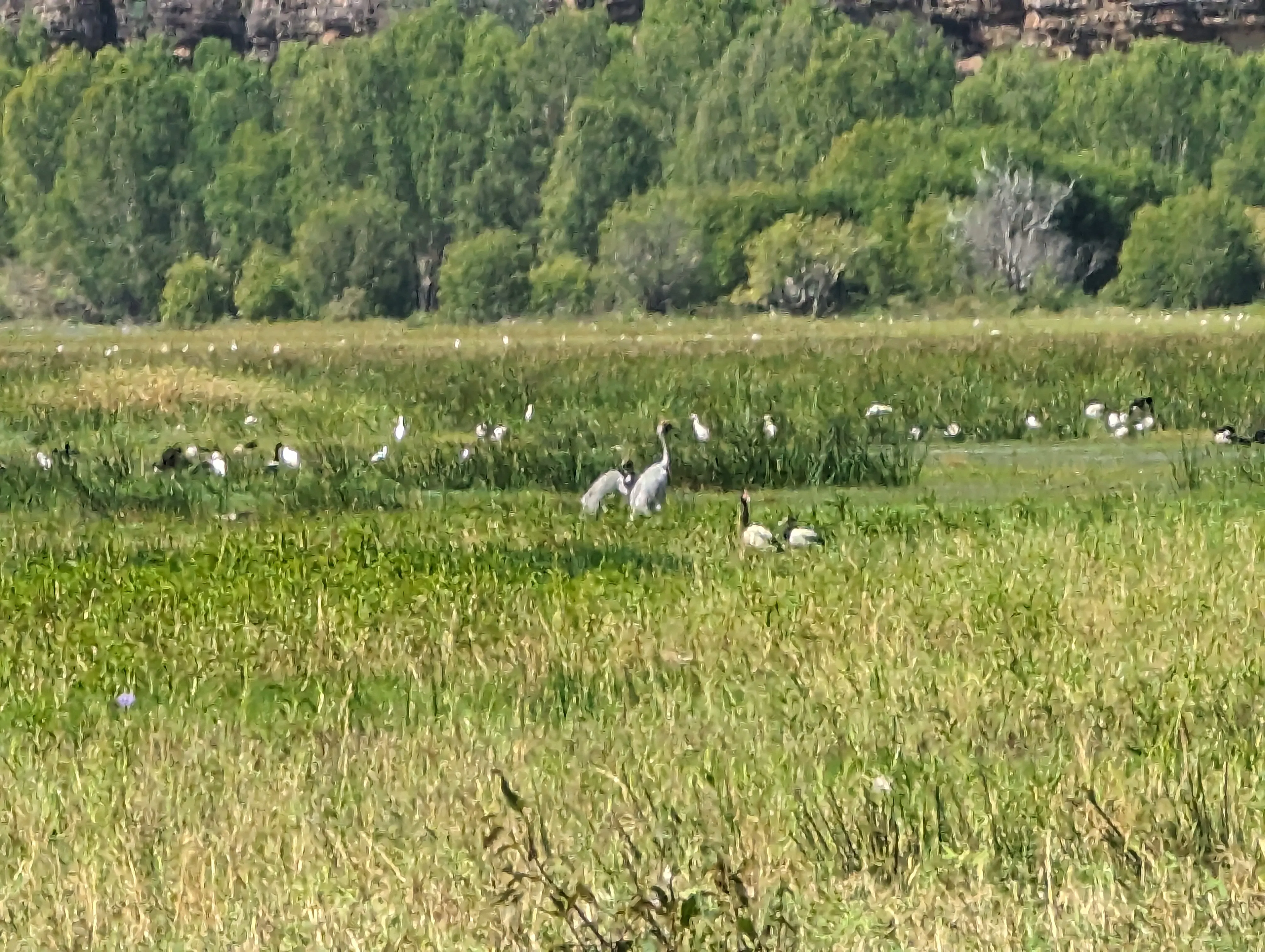
More brolgas!
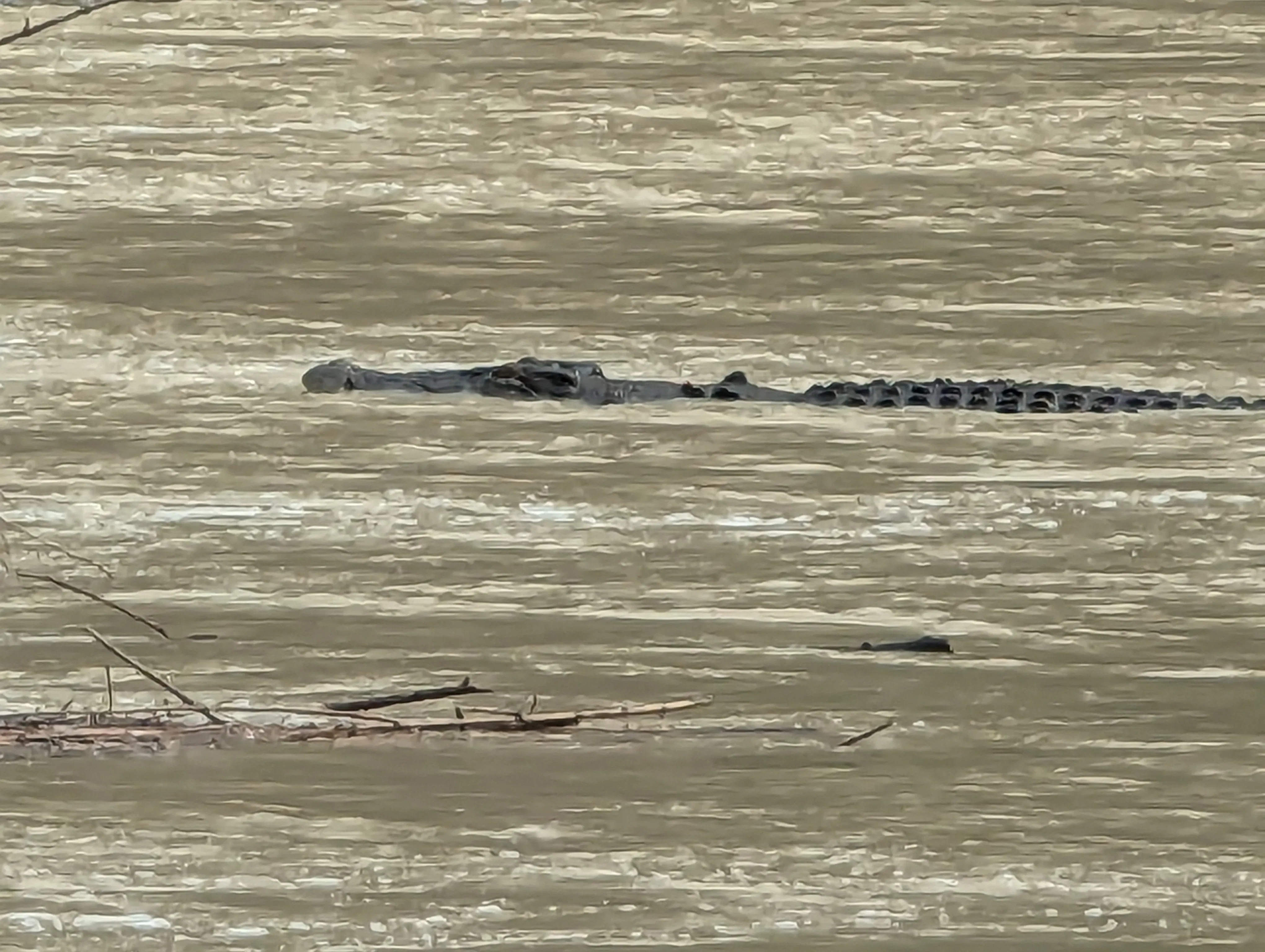
On our final leg home we crossed back over Cahill Crossing, stopping to watch some cars making the crossing as well as some crocodiles fishing.
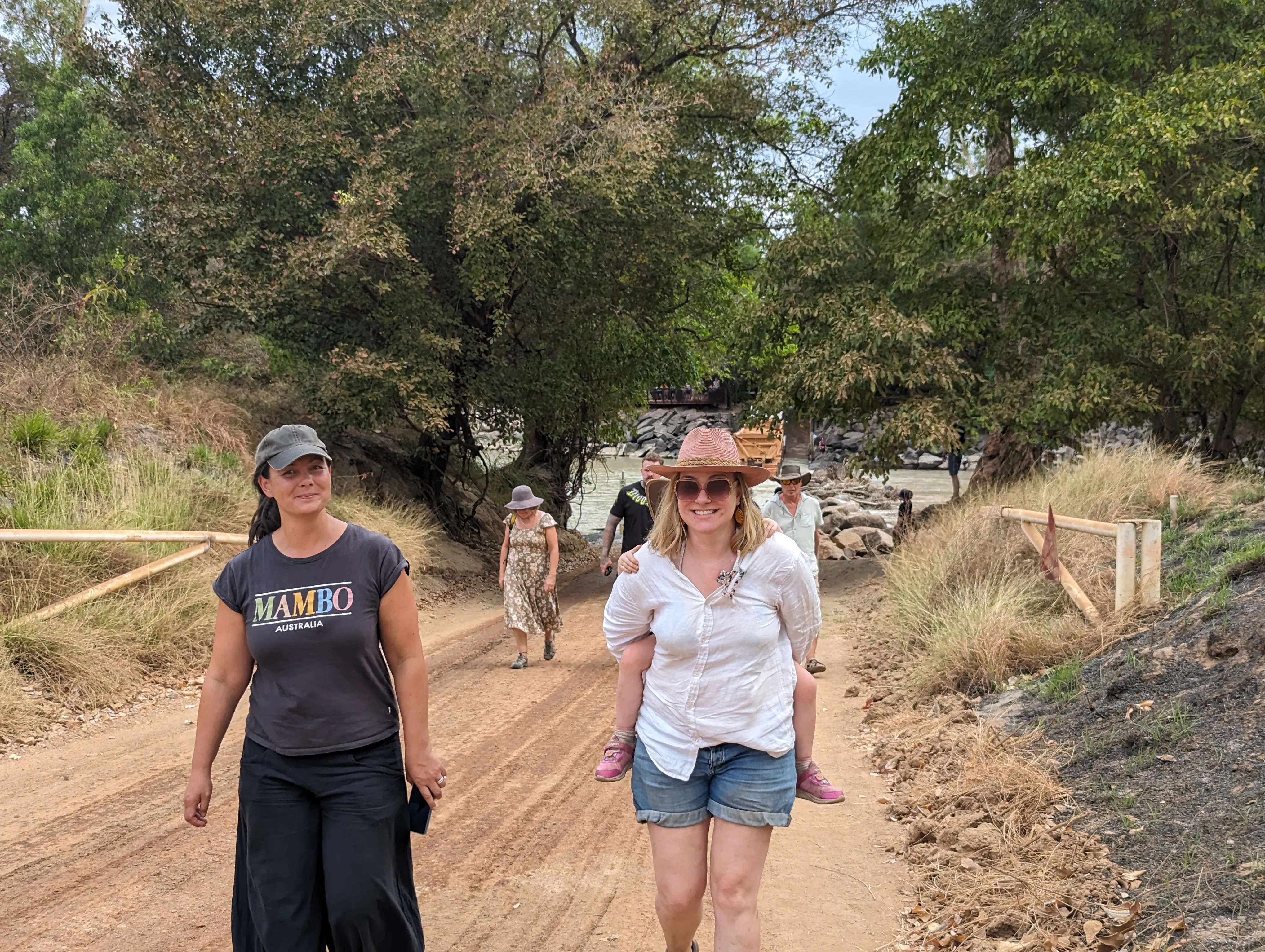
Our intrepid explorer was pretty exhausted by the end of the day, so required a piggy back to make it back to the truck for the final leg.
Going to hit publish now as I'm very much needing to be in bed. Was hoping to include our last adventure at Kakadu at the rock art site in Ubirr, but my brain is shutting down. Please forgive me for any typos / feel free to let me know so I can correct them 🤪. We've been joined by my mum here in Darwin, so there'll be lots of photos with Nally and her grandies in the next few posts!